Used by researchers at
Create a free account to keep this chat
Request demoRun an analysis
- Attach your files with Attach data, or drop them on the message box.
- Say what you want to measure, for example "Count the cells and report confluency".
- A routine analysis, such as a cell count or confluency, starts straight away. One that needs your details or a review, such as fluorescence, an experiment or tracking, shows a plan and waits for you to confirm.
- Results appear in the chat. Any measurement that fails a quality check carries a warning.
The tabs in a chat
Chat is the conversation. Data lists this chat's images and lets you attach more. Output collects the results and files once they are ready.
More detail in the Guide.
Delete this chat?
This deletes the chat and any images you attached to it.
My workflows
Sign in to save a completed method and reuse it on new images. A saved workflow holds the method only, never your images or results.
Save a completed method, then reuse it on new images. Each reuse re-checks the setup and asks you to confirm before anything runs. Native 3D candidate workflows stay provisional and review-only.
Save this method
Give the method a name. Nothing is saved until you confirm the plan in the chat.
Already have an account?
Before we start
- The assistant looks at reduced copies and close-up crops of the images you attach. Measurements run on the full images.
- Guest chats and images expire after two weeks. If an analysis is still running, deletion waits until it finishes.
- See our Terms of Service and Privacy Policy.
Dictate your message
Dictation uses your browser's speech service, which may process your audio. VolkCell does not store any audio. You can edit the text before sending.
- GDPR
- Private tenant
The analysis agent
for any experiment.
Your images
Only images for this conversation appear here.
Your results
Anything this conversation produces and that is available to open or download is listed here.




Free, no account needed: up to 3 images per run.
What would you ask your

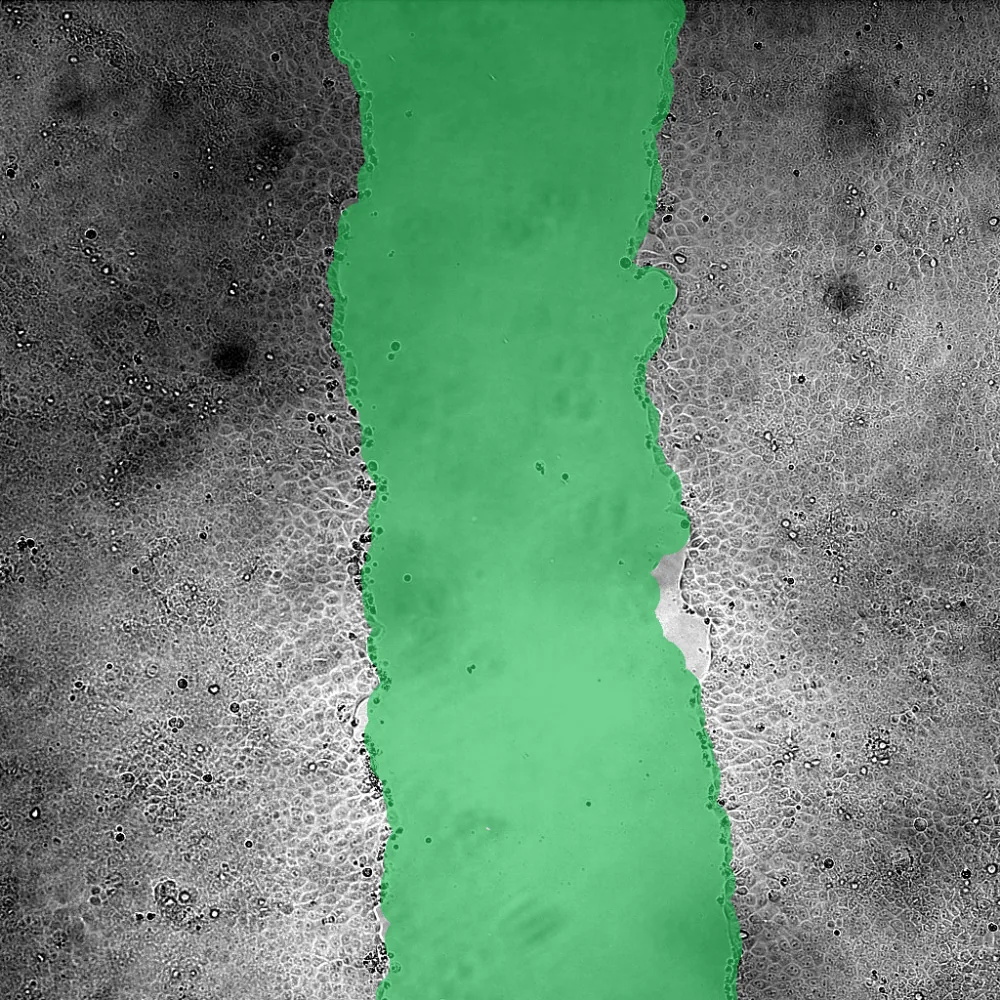

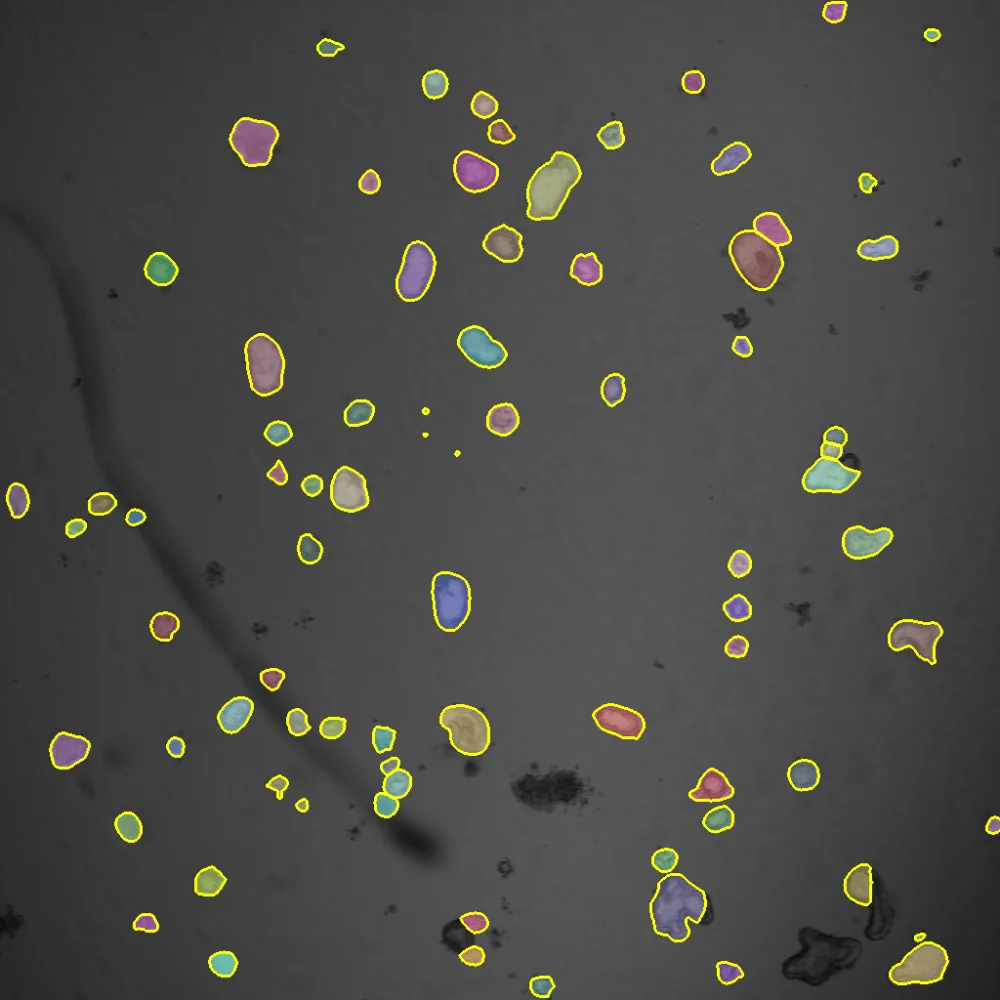

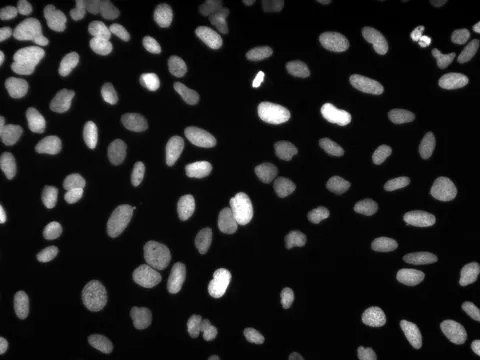

Image credits
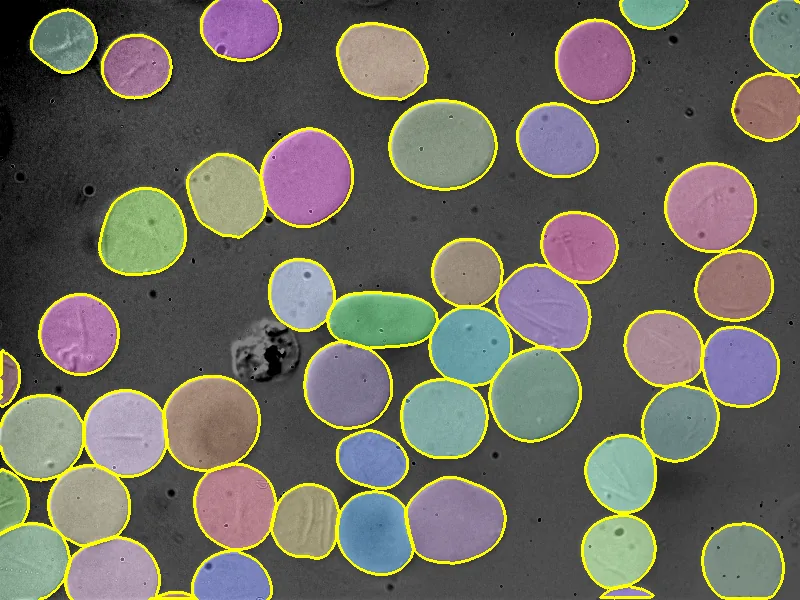
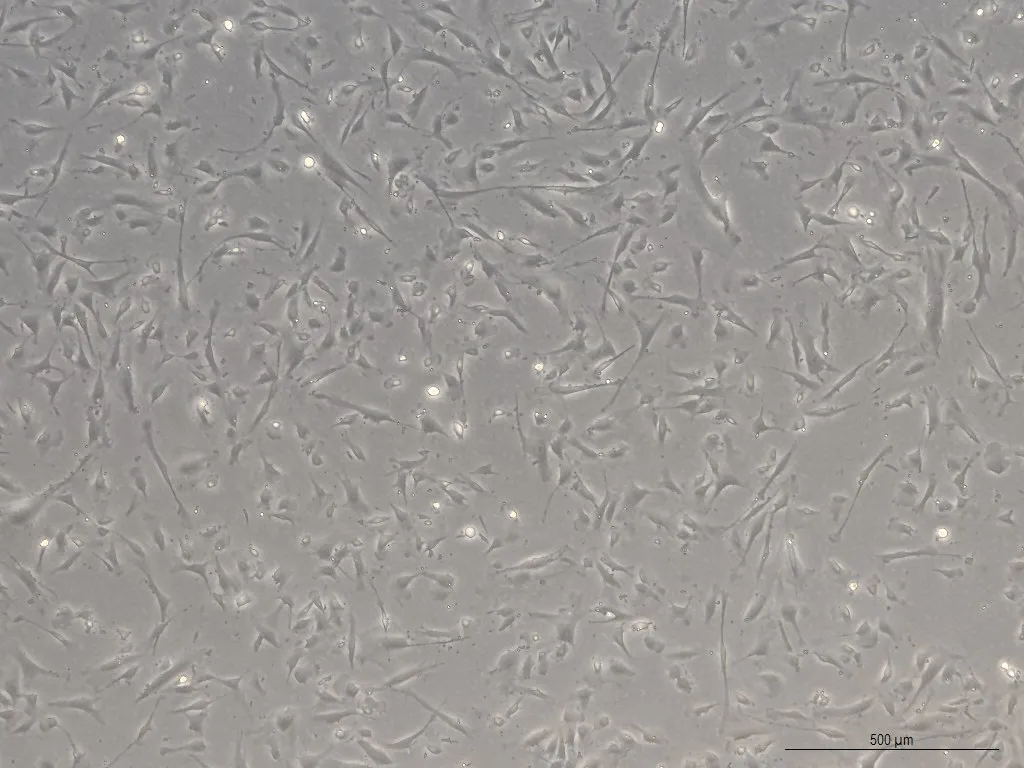
Outlines are VolkCell’s output on these images. The cell-field image is VolkCell’s own.
Wound healing: BBBC019v2, Komoutsakos, Witz, Tsarfay and Zaritsky, CC BY 3.0. Overlay added by VolkCell.
Organoids: Organoid Basic, van Beuningen, Lefferts and UMC Utrecht, CC BY 4.0. Overlay added by VolkCell.
Cells in suspension: BBBC009v1, Roger Wiegand, CC0. Overlay added by VolkCell.
Fluorescent nuclei: BBBC039v1, Caicedo et al. and the Broad Imaging Platform, CC0. Shown without outlines.
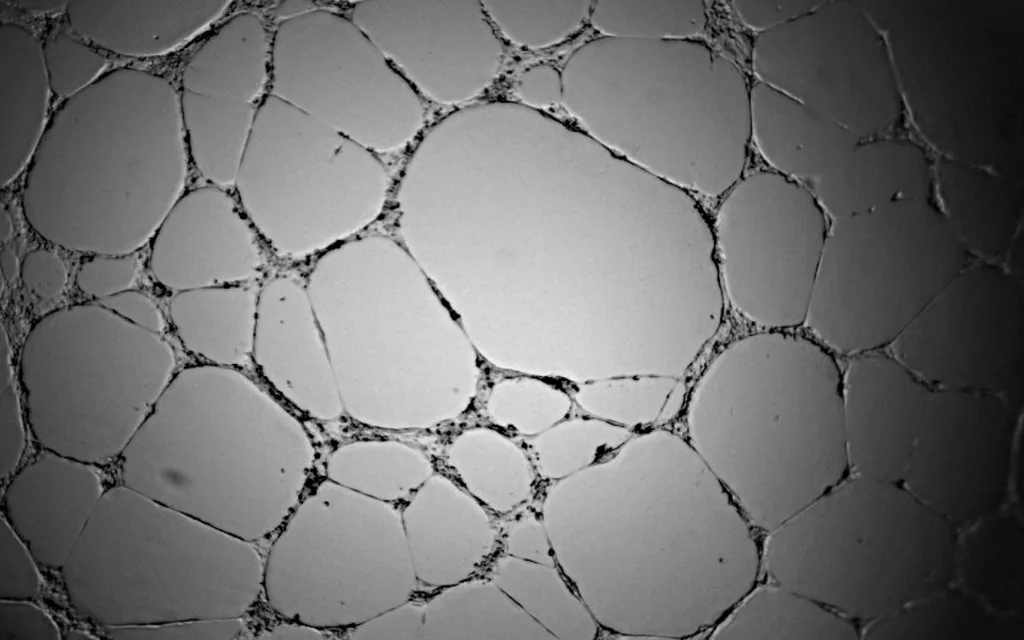
Tube networks (statement and examples): von Versen-Höynck et al. (2014), PLOS ONE 9(6): e98990, Figure 1C, CC BY 4.0. Cropped to one panel.
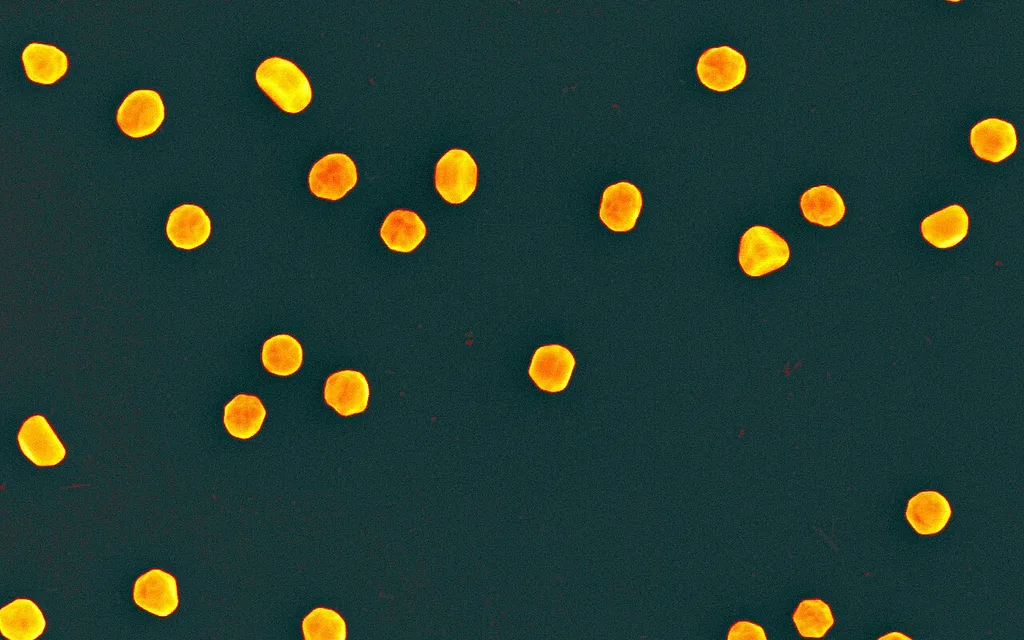
Nanoparticles (statement and examples): gold nanoparticles, scanning electron micrograph, National Institute of Standards and Technology, public domain. Cropped.
Tube networks and nanoparticles are shown as examples of the images you can bring, without VolkCell outlines.
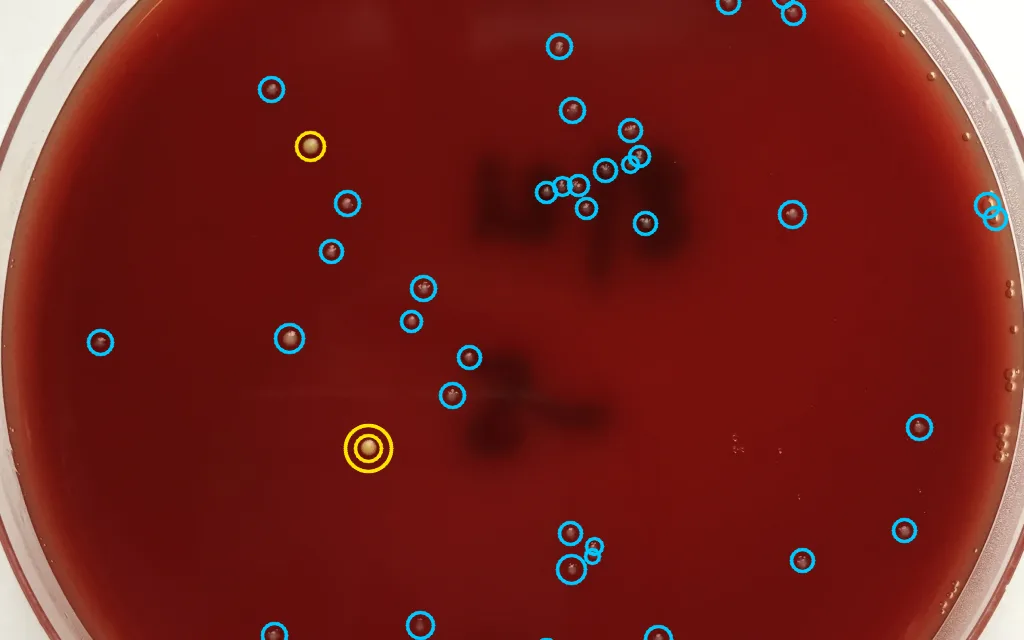
Agar plate colonies (hero example): Makrai et al. (2023), Scientific Data, annotated bacterial colony dataset, CC BY 4.0. Cropped; rings and groups added by VolkCell.
Broad Bioimage Benchmark Collection: Ljosa et al., Nature Methods, 2012.
Bioreactor pH, HPLC, endotoxin and particle-size charts are drawn by VolkCell from invented example values, not customer data.
Ask. Check.
Get the data.
-
Describe your research question
Attach your data and describe your research goal in the chat.
-
Check what runs
VolkCell says what it will run. A routine analysis, such as a count or confluency, starts straight away; for a new workflow, review the proposed image analysis pipeline and accept or refine it before it runs.
-
Run and analyse
Your data is analysed and the available outputs are returned: result tables as CSV, requested plots and, for images, overlays. Review the flags and quality warnings alongside your results.
 adherent-cells.png
Less waiting.
More time for science.
Today
Data waits for the one person who can analyse it.
- Images, plates and chromatograms checked by eye, one at a time
- Values copied between instrument software, spreadsheets and slides
- Out-of-limit results found late, or missed
- Methods rebuilt from memory when someone asks how a value was produced
With VolkCell
The scientist who ran the experiment gets the answer while it’s still fresh.
- Develop an analysis workflow by describing the problem to solve, then save it to run automatically on new data
- Data from your lab instruments (images, plate readers, flow, chromatography, qPCR and bioreactor files) streamed to one central location
- Every result checked against your limits and controls, with anything off flagged
Speak to the team.
Running a CRO, a core facility or a lab team? We can talk through batch runs with quality checks across whole plates, a model trained on your own corrected images, and options for data that can’t leave your walls. Or bring an image analysis job you’re stuck on.
Talk through your data, the measurements you need and a workflow that fits your research.
Frequently asked questions
What is VolkCell?
VolkCell is the analysis agent for laboratory data. It turns raw microscopy images and instrument data, such as bioreactor trends, chromatography, endotoxin, plate reader and particle-size exports, into measurements, plots and reports, directly in the browser, with no code, no installation and no hardware required. Describe your experiment and what you need, attach your data, and VolkCell works out the analysis and shows the method it used.
How accurate and fast is VolkCell?
Accuracy and processing time depend on the data and the measurement. There is no single accuracy percentage that applies to every sample. We check analyses against reference data where it exists, and VolkCell warns you when data looks out of scope, a control fails or a quality check fails. Review the masks, flags and any quality warnings before using a result; some data needs review, correction or a new run. Models trained on your own data also need validation for your intended use.
Which experiments does VolkCell support?
Imaging: adherent and suspension cells, cell counts and viability, confluency, scratch and wound assays, spheroids and organoids, tube formation, bacterial and fungal colonies on agar plates (counted and grouped by appearance), nanoparticles and retinal vessels. Instrument and assay data: bioreactor trends such as pH and dissolved oxygen, HPLC purity, endotoxin (LAL), plate reader assays such as ELISA, and particle size. Newer analyses are marked as not yet validated in your results. You can also ask your own questions, such as counts inside a region you drew, trends over time or comparisons against your acceptance criteria. If something can’t be answered from the data, VolkCell says so. If your instrument or file type isn’t covered yet, book a call and tell us what you need.
Can I use VolkCell without an account?
Yes. When guest access is available, you can analyse up to 3 images per run and review the mask preview, counts and confluency within a limited trial allowance. Guest chats and uploaded data expire after 14 days. Creating an account adds saved chat history, measurement CSV and label mask downloads, larger batches, experiment organisation and access to advanced tools where available, subject to the usage allowance shown in the workspace.
What happens to my data?
Your data and results stay in your account until you ask us to delete them, and we delete them within 30 days of a request. Chats without an account expire after two weeks. We don’t sell your data, and we don’t train our models on your data unless you choose to, for example by training a custom model on your own images. Data is processed by our hosting, compute and AI providers, some outside the UK and the EU; our Privacy Policy lists them and the safeguards we use. If your data can’t leave your walls, book a call.
How much does VolkCell cost?
You can try VolkCell without an account, up to 3 images per run. A free account adds a daily analysis allowance. For lab teams, CROs and dedicated analysis capacity, book a call and we’ll quote once we understand what you need.
Where is VolkCell based?
VolkCell is based in Edinburgh, United Kingdom.